Construction sites are among the most complex and high-risk working environments in the UK. Heavy vehicles, moving machinery, pedestrians, and constantly changing layouts create daily safety challenges. At the same time, the industry is under growing pressure to improve sustainability, reduce waste, and adopt greener materials.
One of the most practical solutions emerging across the sector is the use of recycled rubber-based safety equipment, often combined with engineered plastic polymers. These materials are now widely used to improve safety performance while supporting environmental objectives.
Why Construction Sites Need Safer and More Durable Materials
Construction environments are extremely demanding. Equipment must withstand heavy loads, frequent movement, impact from vehicles, and exposure to harsh weather conditions.
Traditional materials such as rigid plastics or concrete often present limitations: they can crack under impact, are heavy to install, and are not always practical for temporary site layouts.
As a result, contractors increasingly look for solutions that are:
- Impact resistant
- Weatherproof
- Easy to install and reposition
- Cost efficient over the full project lifecycle
Recycled rubber-based composite materials are becoming a preferred alternative because they meet these requirements while also supporting sustainability goals.
The Role of Recycled Rubber and Composite Materials in Construction Safety
Modern construction safety products are increasingly manufactured using recycled rubber combined with high-performance polymer materials. This combination delivers both flexibility and structural durability.
Recycled rubber provides excellent shock absorption and impact resistance, making it ideal for environments with heavy vehicle movement. Engineered plastic components enhance structural integrity, UV resistance, and long-term durability.
In addition to performance benefits, these materials contribute directly to waste reduction, particularly by reusing end-of-life tyres that would otherwise end up in landfill or incineration.
Traffic Calming and Vehicle Control
Speed control is one of the most critical safety measures on active construction sites, where heavy vehicles, forklifts, delivery trucks, and pedestrians share the same working space.
Without proper control, even well-managed sites can quickly become hazardous, which is why HSE Guidance places strong emphasis on safe vehicle and pedestrian movement.
Recycled rubber speed bumps and speed humps are widely used to force vehicles to slow down at key points such as site entrances, pedestrian crossings, loading zones, and blind corners. Unlike rigid concrete alternatives, rubber-based systems absorb impact, reduce vehicle wear, and can be installed or repositioned quickly as site layouts change.
In addition, modular traffic calming systems allow contractors to adapt safety layouts throughout different phases of a project. This flexibility is particularly valuable on temporary or fast-changing construction sites.

Together, these solutions help reduce collisions, near misses, and unsafe driving behaviour, while improving overall site control.
Parking and Loading Zone Management
Organising vehicle movement in parking and loading areas is another key safety priority.
Recycled rubber wheel stops and parking blocks help guide vehicles into correct positions, prevent accidental contact with structures, and improve order in busy logistics areas.
Their flexibility and impact resistance make them suitable for heavy-duty use, while their recycled composition supports environmental objectives on larger infrastructure projects.
Cable and Hose Protection
Electrical cables and hoses are essential on most construction sites, but they also represent a major trip and damage risk.
Cable ramps and cable protectors made from recycled rubber composites provide a safe crossing solution for vehicles and pedestrians. They protect cables from crushing damage while significantly reducing trip hazards in high-traffic areas.
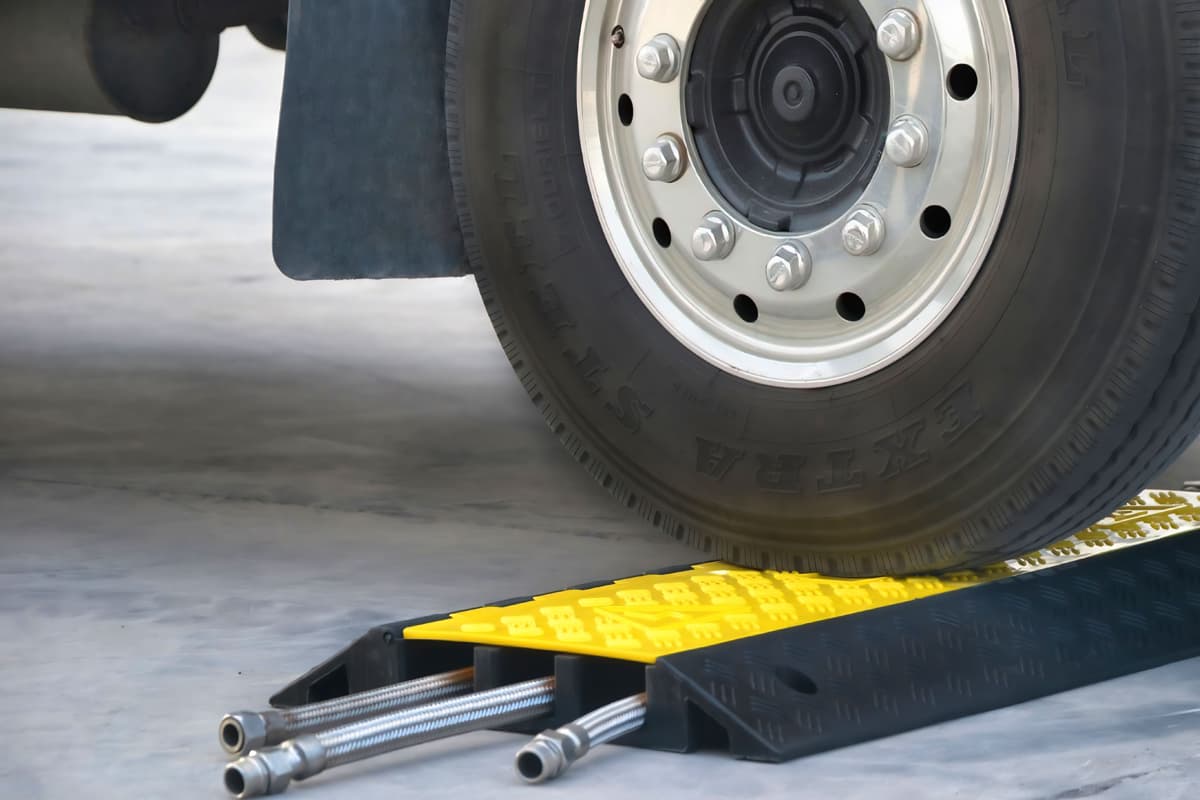
Their modular nature also allows quick deployment and repositioning as site layouts evolve.
Site Separation and Pedestrian Safety
Clear separation between pedestrians and vehicles is fundamental to construction site safety.
Traffic cones and temporary delineation systems made from durable materials such as recycled rubber or high-visibility polymers are widely used to define pedestrian walkways, restrict vehicle access zones, and guide movement across busy sites.
These systems are particularly effective in temporary environments where layouts change frequently, allowing site managers to quickly reconfigure circulation routes while maintaining clear visual safety boundaries.
Environmental Benefits and Sustainability Impact
Beyond safety performance, recycled rubber safety equipment contributes to sustainability goals across the construction industry.
Key benefits include:
- Reduction of end-of-life tyre waste
- Lower reliance on virgin raw materials
- Long product lifespan compared to conventional alternatives
- Reduced replacement frequency and maintenance waste
As sustainability requirements become more integrated into procurement decisions, these factors are increasingly important for contractors and developers.
Choosing the Right Supplier Matters
Material choice is only part of the equation. Product quality, consistency, and manufacturing standards are equally important for safety-critical applications.
Reliable suppliers of recycled rubber-based construction safety equipment typically ensure:
- Consistent material performance under heavy use
- Compliance with European and UK expectations
- Durable designs suitable for demanding site conditions
- Efficient supply for large-scale infrastructure projects
Companies such as Sino Concept Traffic Safety Supplier, which specialise in recycled rubber and composite traffic safety equipment, support construction projects with durable and cost-effective solutions designed for real-world site conditions.
Conclusion
The construction industry is increasingly focused on improving both safety and sustainability. Recycled rubber-based composite safety equipment offers a practical solution that addresses both priorities.
From traffic calming systems to cable protection and site organisation, these products help create safer, more efficient, and more environmentally responsible construction sites.
As the industry continues to evolve, recycled materials are expected to play an even greater role in shaping the future of construction site safety infrastructure.