As modern homeowners increasingly ask for living spaces that offer unique functionality alongside luxurious aesthetics, contractors deliberately choose to use high-end furniture that adds to living environments without compromising on functionality, cost-effectiveness, or longevity.
This trend isn’t just about luxury appeal. There is a general change in terms of buyer requirements where craftsmanship, comfort, and sustainable values are considered imperative for a successful property venture.
In this article, we explore best practices for specifying high-end interior elements in contemporary residential projects — from material selection and performance criteria to coordination with wider construction goals.
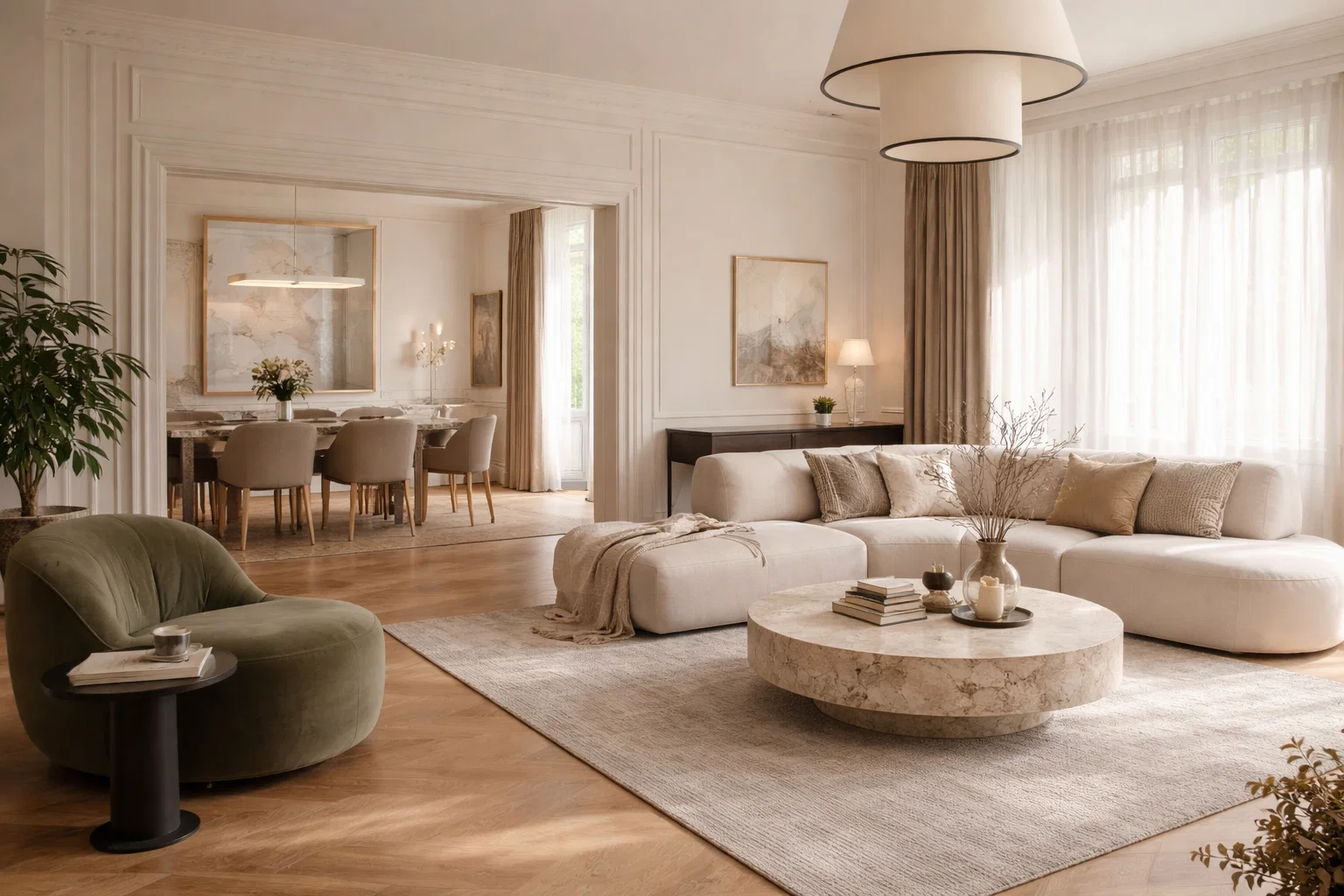
Why Premium Furnishings Matter in Residential Developments
Gone are the days when standard fittings in the house were enough. The modern buyer wants a space that looks and feels finished, cohesive, and desirable from the very first day. However, this is also evident in broader market trends, where the interior is increasingly a factor in determining the value of the space itself.
Premium furniture and fixtures can:
- Enhance perceived quality to enable better sales price realization and faster turnover.
- To offer long-lasting durability, thereby reducing post-handover maintenance costs.
- Help the properties compete favourably by ensuring they align with the spirit of the times.
Furniture sourcing from international suppliers can provide pieces such as high-performance kitchen cabinetry or bespoke wardrobes and designer lighting. These carefully selected interior elements contribute to long-term occupant comfort and property durability as they become spatial infrastructure in modern homes.
Core Principles for Specifying Premium Furniture and Fixtures
1. Understand Your Market and Demographic
A successful specification starts with knowing who will live in your development. An apartment in the city will call for different aesthetic and performance priorities than a suburban family home.
- Young professionals might favour minimalist, modular furniture with integrated tech solutions.
- Families often prioritise robust materials and flexible storage.
- Luxury buyers increasingly expect bespoke or artisanal pieces that reflect craft and individuality.
Understanding these preferences early helps define the specification brief and ensures that materials and design choices are both relevant and aspirational.
2. Prioritise Material Performance and Longevity
Furniture and fixtures for a room should be of the best quality — not only must they be pleasing to look at, but they must also be durable enough to meet functional needs.
Consider these options:
- Sintered stone surfaces for countertops and splashbacks are increasingly specified because of their exceptional durability, stain resistance, and sleek finish.
- Solid hardwoods and engineered wood veneers offer long-lasting beauty in cabinetry and millwork when properly sealed and finished.
Choosing materials that perform well over time can significantly reduce remediation calls and enhance homeowner satisfaction.
3. Align with Sustainability Goals
Sustainability is no longer a “nice-to-have” — it’s often a buyer expectation and a regulatory consideration. Sustainable specifications include:
- Certified wood products for cabinets and fixtures.
- Low-VOC finishes and adhesives to improve indoor air quality.
- Recyclable or reclaimed materials, which can also add a unique character.
4. Coordinate with the Wider Construction Process
One of the biggest issues that arises, especially in residential schemes, is a disconnect between fit-out and construction sequencing, which can delay furniture installation programs.
Synchronizing furniture specifications with the build schedule helps ensure smoother delivery and reduces conflicts or clashes.
Designer Fixtures to Pay Attention to
To stay ahead of market expectations, consider the following design trends in high-end residential interiors.
Smart and Integrated Lighting
Modern lighting fixtures do more than illuminate; they control ambience, can integrate with home automation systems, and optimise energy performance. Smart LED systems add value and appeal, particularly to tech-savvy buyers.
Multi-Functional Furniture
Space efficiency remains a priority in modern housing, especially in urban areas. Furniture that doubles as storage, desk spaces, or fold-away elements responds to this need while enhancing usability without clutter.
Premium Soft Furnishings
Upholstery fabrics and textiles with performance finishes are increasingly specified in modern apartments to create a sense of warmth and comfort.
Collaborating with Trusted Suppliers
The success of premium specifications will depend on working with companies that fully understand both the design and practical performance requirements for a particular project. This will ensure that furniture and fixtures are manufactured to the highest standards.
For developers eager to add more sources of supply to their repertoire, working with well-established providers of Chinese furniture can bring an aesthetic and individualistic look to the development. Utilizing suppliers with an established track record helps ensure the project vision is realized seamlessly.
Final Thoughts
Instead of being viewed as merely luxurious additions to buildings, premium furniture and fixtures are strategic design components that shape purchaser perception, inhabitant well-being, and financial value. Consequently, by basing specifications on market knowledge, performance requirements, sustainability issues, and integrated planning strategies, developers can provide housing that meets today’s standards.
The result is the developments that sell well, perform well, and leave a lasting positive impression. As residential construction continues to evolve, so too must our approach to interiors — from structural design to the final decorative detail.