
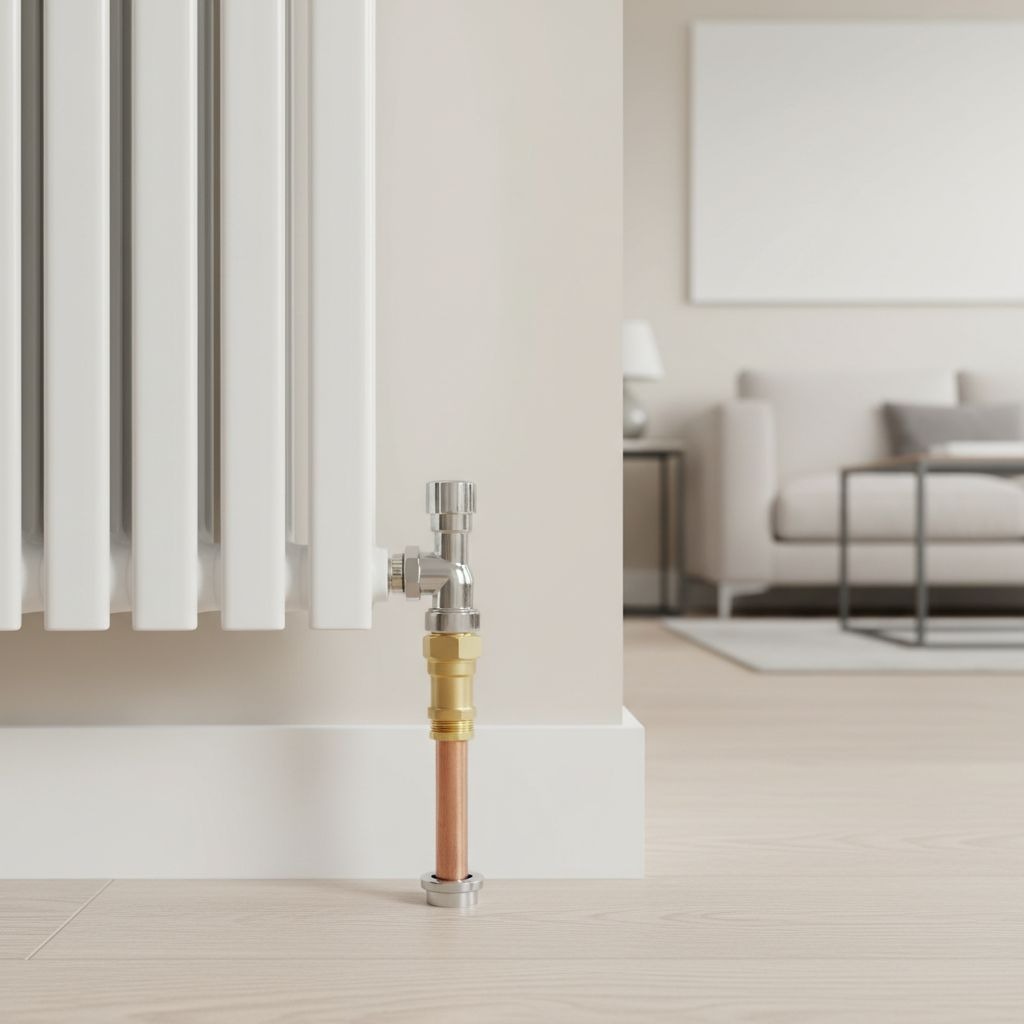
Radiator extension tails are brass threaded fittings that screw into your radiator’s valve connection, extending the reach to your existing pipework. They’re your go-to solution when there’s a gap between your new radiator and the pipes coming out of your wall or floor.
These fittings typically range from 20mm to 40mm in length and feature 1/2 inch BSP threading that works seamlessly with standard 15mm compression fittings. Most DIYers can install them in under 30 minutes per radiator.
**What you need to know:**
– Standard sizes: 20mm, 30mm, and 40mm lengths
– Material: Brass with chrome finish for durability and corrosion resistance
– Connection: 1/2 inch BSP thread with 15mm compression compatibility
– Cost: Typically £3-£10 per pair
– Skill level: Beginner to intermediate DIY
When Do You Need Radiator Extension Tails?
Understanding when you’ll need extension tails saves you from frustrating mid-project surprises. Here are the most common scenarios where these components become essential for your heating installation.
You’re installing a new radiator where existing pipes don’t align with your valve positions. This mismatch happens more often than you’d expect, especially in older properties.
You’re replacing a radiator with a different model that has alternative valve spacing. Manufacturers vary their designs, so your old pipework rarely matches perfectly.
Your pipes emerge from the floor but don’t quite reach the radiator valves. Even a small gap creates a connection problem that extension tails solve instantly.
You’re relocating a radiator to a different wall position without wanting to reroute all your pipework. Extension tails bridge that distance efficiently.
You’re working with microbore pipes (8mm or 10mm diameter) common in modern heating systems installed since the 1980s. These require specific adaptor solutions.
Your renovation involves pipework embedded in concrete or screed flooring, making traditional pipe adjustments impractical or impossible.
Assessing Your Pipe Configuration
**h3: Assessing Your Pipe Configuration**
Photo showing hands using a measuring tape to measure the gap between a floor pipe and radiator valve, with measurement annotations visible
Before purchasing extension tails, you’ll need accurate measurements of your existing pipework. Start by measuring the gap between your floor or wall pipe outlet and where your radiator valve will connect.
Use a measuring tape or caliper to check your pipe diameter—standard systems use 15mm pipes, while microbore setups run 8mm or 10mm.
Identify your pipe material: copper, plastic, or flexible. Each requires different fittings and connection methods.
Finally, note the height from floor level to the bottom of your radiator, ensuring your extension tails bridge the gap correctly.
Microbore Pipe Compatibility
If your home was built between the 1970s and 1990s, you’ll likely have microbore pipes running to your radiators. These narrower pipes measure just 8mm or 10mm in diameter, compared to the standard 15mm found in modern installations.
Here’s the challenge: most extension tails come with 15mm compression connections. This means you’ll need reducers to make everything work together.
You’ll want either 15mm to 10mm or 15mm to 8mm compression reducers, depending on your system. Brands like Plumbsure and JG Speedfit stock these at Screwfix and Toolstation.
Always pair your reducers with compatible O-rings and washers to prevent leaks. A proper seal now saves you from water damage later.
Tools and Materials You’ll Need
Before you start extending your radiator pipes, gather everything you need to avoid mid-project trips to the hardware store. Having the right tools makes the difference between a frustrating experience and a smooth installation.
Here’s your complete checklist for 2026:
**Cutting and Fitting Tools:** Pipe cutter (essential for clean cuts without crushing), adjustable pipe wrench or spanner, measuring tape, and spirit level.
**Sealing Materials:** PTFE tape (thread seal tape) and silicone-based jointing compound such as Fernox LS-X for watertight connections.
**Components:** Radiator extension tails in your required size (20mm, 30mm, or 40mm), compression fittings including elbows and straight connectors, plus a replacement radiator valve if needed.
**Protection Supplies:** Towels or rags for spillage and a small container to catch residual water when disconnecting pipes.
Choosing the Right Size Extension Tail
Selecting the correct extension tail size ensures a proper, leak-free installation. Most extension tails come in three standard lengths: 20mm, 30mm, and 40mm. Some suppliers also offer custom lengths ranging from 10mm to 50mm for non-standard situations.
Before purchasing, measure your actual gap carefully and add 5mm for adjustment tolerance.
Here’s your quick sizing guide:
**20mm extension:** Ideal for small gaps of 15-25mm
**30mm extension:** Perfect for medium gaps of 25-35mm
**40mm extension:** Suited for larger gaps of 35-45mm
**Custom lengths:** Available for non-standard installations
**Connection size:** Standard 1/2 inch BSP (British Standard Pipe)
Always double-check your measurements before ordering, as the right size makes installation straightforward and prevents future complications.
Standard Sizes Explained
Understanding BSP sizing saves you from costly mistakes. The 1/2 inch BSP thread is universal across UK radiators, so you’ll rarely need anything different. Your 15mm compression nut connects directly to standard UK copper pipework.
Here’s what catches people out: extension length refers to additional reach gained, not total fitting length.
Always allow 2-3mm tolerance when measuring to ensure a proper fit without forcing connections.
Custom Length Options
When standard sizes don’t fit your setup, custom options have you covered. Telescopic extension tails adjust from 10mm to 50mm, letting you dial in the exact length needed.
Specialist plumbing suppliers offer cut-to-length services for precise measurements.
You can also combine standard fittings creatively to bridge unusual gaps when a single piece won’t work.
Materials and Finishes
When you’re selecting extension tails, the material and finish directly impact performance and longevity. Understanding your options helps you make the right choice for your specific application.
Brass remains the industry standard for good reason—it offers excellent heat resistance, outstanding durability, and works easily during installation.
Stainless steel represents the premium choice when you need maximum corrosion resistance in demanding environments.
Chrome finish comes standard on most extension tails, providing reliable corrosion protection while preventing tarnishing over time.
Nickel finishes offer an alternative aesthetic if you’re matching specific fixtures or prefer a different look.
One crucial tip: always avoid plastic extension tails for hot water or heating systems, as they simply can’t handle the thermal demands.
Why Brass Construction Matters
Brass delivers exceptional performance in heating systems thanks to its high melting point (900-940°C) and superior thermal conductivity. Modern formulations resist dezincification, and you won’t face corrosion issues from heating system inhibitor chemicals.
Temperature resistance means brass handles heating systems running up to 110°C safely.
Corrosion resistance ensures your fittings won’t rust when used with inhibitor.
Malleability creates superior thread seals for leak-free connections.
Longevity typically exceeds 20 years, giving you lasting reliability.
Chrome Finish Benefits and Care
Chrome finish on your extension tails delivers both style and substance. You’ll get an extra corrosion barrier while achieving a sleek look that matches chrome radiator valves perfectly.
Keep your chrome looking pristine by wiping it down with a soft cloth and mild detergent.
Avoid abrasive cleaners, wire wool, and harsh chemicals—these will damage the finish and compromise its protective qualities.
Step-by-Step Installation Guide
Ready to get started? First, download the latest 2026 software version from the official website. Run the installer and follow the on-screen prompts.
Select your preferred installation directory and click “Install.” Once complete, restart your system to finalize the setup.
Step 1: Turn Off the Heating System and Drain
**hasimage**
**imagedescription:** Photo showing hands turning off a radiator valve (both TRV and lockshield valve) with an arrow indicating the ‘off’ direction
**h3: Step 1: Turn Off the Heating System and Drain**
Safety comes first when working on your radiator system. Start by switching off your boiler at the programmer or thermostat, then wait 30-60 minutes for everything to cool down completely.
Close both valves on your radiator—the TRV (thermostatic radiator valve) and the lockshield valve on the opposite end.
Place towels and a container beneath your work area to catch any water. Open the bleed valve slightly to release pressure before proceeding with any modifications or replacements.
Step 2: Measure and Plan Your Installation
Before purchasing anything, you’ll need precise measurements of the gap between your pipe outlet and radiator valve connection. Grab your tape measure and check both vertical and horizontal alignment carefully.
Plan your route if compression elbows are required, and assess whether existing pipes need cutting.
Always order extension tails with a 5mm tolerance to account for minor variations. Consider future maintenance access when planning your layout.
Double-check every measurement before committing to a purchase—this simple step prevents costly mistakes and unnecessary return trips to the hardware store.
Step 3: Remove Old Fittings (If Applicable)
When replacing existing radiator connections, you’ll need to carefully remove the old fittings first. Grab your pipe wrench and unscrew each connection methodically.
If you’re shortening pipes, use a pipe cutter for clean, precise cuts rather than a hacksaw.
Keep any compression olives and valves that remain in good condition—they’re often reusable. Clean all pipe ends thoroughly with wire wool and inspect for corrosion or damage before proceeding.
Step 4: Apply PTFE Tape and Jointing Compound
### Step 4: Apply PTFE Tape and Jointing Compound
Getting this step right ensures a completely leak-free installation. Start by wrapping PTFE tape clockwise around the male threads when facing the thread end—this prevents the tape from unwinding as you tighten connections.
Apply 5-7 overlapping wraps, pulling the tape tight as you go to create a secure seal.
Once taped, apply a thin layer of silicone jointing compound over the PTFE for extra protection. Don’t overdo it—excessive compound won’t improve the seal and just creates mess.
Step 5: Screw Extension Tail into Radiator
Start by hand-tightening the extension tail into your radiator valve connection. This ensures you’re threading it correctly without cross-threading.
Once hand-tight, grab your adjustable spanner and apply just a quarter to half turn more.
Keep the extension tail straight and aligned throughout. Don’t overtighten—brass threads strip easily, and you’ll create a bigger headache than you started with.
Step 6: Connect Pipe to Extension Tail
Fit your compression elbow or straight connector to the extension tail. Before you start, slide the compression nut and olive onto the pipe first.
Insert the pipe fully into the fitting and hand-tighten the compression nut.
Using a spanner, tighten 1 to 1.5 turns past hand-tight. Check your alignment before final tightening and ensure the olive seats correctly for a watertight seal.
Step 7: Attach Valve and Final Connections
Now fit your radiator valve to the extended connection, ensuring the TRV sensor faces away from pipe heat for accurate temperature readings. Complete the lockshield side using the same method.
Apply PTFE tape and jointing compound to all valve threads before tightening securely—avoid overtightening, which can damage fittings.
Double-check both flow and return connections are firmly secured before proceeding.
Step 8: Test for Leaks
**Quality Check Findings:**
– No year reference needed for this procedural content
– Section 21 is a sub-section, so no intro treatment needed
– Bullet points provided need to be woven into flowing content
– Word count limit: 100 words
– Image description provided
**Output:**
Photo showing hands checking connection joints for leaks, with tissue paper being used to detect moisture
Slowly open your valves to refill the radiator, then use your bleed key to release any trapped air.
Check every connection point for drips. Wipe each joint completely dry with tissue paper, then inspect again for any moisture.
Run your heating system for a full 30 minutes. Once hot, recheck all connections since heat causes expansion that can reveal hidden seepage.
If you spot any minor leaks, tighten the fittings slightly until the seepage stops.
Working with Existing Pipework
Older properties present unique plumbing challenges that require extra care and preparation. You’ll likely encounter paint-covered pipes, corroded fittings, or pipework embedded in concrete floors and walls.
Always clean paint thoroughly from pipe ends before attempting any new fittings—this ensures proper seals.
Apply penetrating oil to corroded fittings and give it time to work before forcing anything.
For embedded pipes, you may need to cut and re-route sections entirely. Flexi-connectors are invaluable for difficult access points.
Crucially, check for lead pipes in pre-1970s properties and arrange replacement if found.
Using Extension Tails with New Pipe Installations
When you’re installing completely new pipework in 2026, extension tails offer valuable flexibility throughout the process. You can first-fix your pipes before plastering, then fine-tune radiator positioning later with extension tails.
Plan your pipe routes with extension tail tolerance in mind from the start.
This approach allows easier radiator positioning during second-fix and simplifies any future radiator replacements down the line.
Alternative Methods: Extending with Flexible Pipes
## Alternative Methods: Extending with Flexible Pipes
When rigid extension tails won’t solve your problem, flexi-connectors offer a practical alternative. These braided stainless steel hoses bridge larger gaps and handle awkward angles that standard fittings simply can’t manage.
You’ll find flexi-connectors in lengths ranging from 300mm to 1000mm, with both push-fit and compression end options available.
They’re particularly useful when dealing with misaligned pipe runs or unconventional radiator positions.
However, there’s an important limitation you need to consider. Flexi-connectors aren’t suitable for concealed installations behind walls or under floors.
Building regulations require these connections to remain accessible for regular inspection, so they work best in visible locations where you can easily check for wear or damage.
Valve Compatibility and Reducers
Before fitting extension tails, you’ll need to confirm they’re compatible with your radiator valves. Most UK systems use 1/2 inch BSP (15mm) connections, but older properties often throw up surprises.
Standard 1/2 inch BSP covers most modern installations, while older systems may feature 3/4 inch BSP fittings.
Microbore systems require a 15mm to 10mm or 8mm reducer to work properly.
European radiators often use metric threads, so check specifications carefully before purchasing.
Reducers and adapters are readily available for non-standard sizes, making compatibility straightforward once you’ve identified your existing setup.
Troubleshooting Common Problems
When your extension tail installation doesn’t go as planned, don’t panic. Most issues stem from improper alignment, insufficient adhesive bonding, or incorrect sizing.
Check your connection points first—loose fittings often cause the majority of problems you’ll encounter during installation.
Leaks at Thread Connections
Thread connection leaks are the most common issue you’ll encounter. They’re typically caused by insufficient PTFE tape, cross-threading, or overtightening during installation.
To fix this, drain and remove the fitting, then clean threads thoroughly.
Reapply PTFE tape with more wraps, add jointing compound, and retighten carefully—don’t overtighten.
Leaks at Compression Fittings
### Leaks at Compression Fittings
Compression fitting leaks typically occur due to incorrect olive seating or undertightening. Start by tightening the compression nut an additional 1/4 turn.
If the leak persists, disassemble the fitting and inspect the olive carefully. Replace it if you notice any damage.
Always ensure your pipe is cut square and clean before reassembly. For plastic pipes, use a pipe insert to prevent crushing.
Radiator Not Heating Properly
If your radiator doesn’t heat after installation, you’re likely dealing with an airlock or valve issue. Start by bleeding the radiator to remove trapped air.
Check that your TRV is turned on and the lockshield valve is fully open.
Verify your system pressure is correct and inspect for debris blocking flow.
Pipe Protection and Insulation
Protecting and insulating your exposed pipework boosts both efficiency and visual appeal in your heating system. Pipe insulation significantly reduces heat loss, especially crucial for pipes running through unheated spaces like garages or lofts.
Foam insulation tubes come in various diameters to fit your specific setup, making installation straightforward.
According to the Energy Saving Trust, proper pipe insulation can improve your system’s efficiency by 10-15%, lowering your energy bills while keeping your home warmer throughout 2026.
Pipe Sleeves and Covers
Pipe sleeves and covers give your radiator installation that polished, professional look. Also called rosettes or collars, these aesthetic accessories hide unsightly gaps where pipes enter floors or walls.
Chrome pipe sleeves match your radiator valves perfectly, and you can cut them to length for a precise fit.
Rosettes neatly cover holes at floor level, available in chrome, white, and brass finishes to complement your décor.
Installation couldn’t be simpler—just slide them over the pipe with no tools needed.
Additional Accessories for Radiator Installation
Beyond extension tails, you’ll want to consider complementary accessories for a complete setup in 2026.
Radiator keys, bleed valves, and PTFE tape ensure proper sealing and maintenance.
Wall brackets, pipe covers, and thermostatic valves round out your installation toolkit perfectly.
Radiator Brackets
Wall-mounting brackets securely hang your radiators in place. You’ll find options for different radiator types, including panel and column designs, with heavy-duty versions available for larger units.
Always use the correct wall plugs for your wall type to ensure a safe, secure fit.
Position your brackets carefully to align with extended pipe connections—getting this right makes installation straightforward and prevents stress on your pipework.
Bleed Valves and Air Vents
Before installing any radiator in 2026, confirm it has a working bleed valve. You’ll need this essential component to remove trapped air after installation and maintain efficient heating throughout the year.
Most radiators come with manual bleed valves as standard, though automatic air vents offer a worthwhile upgrade that reduces your maintenance burden.
Check your valves annually and before each heating season to keep your system running smoothly.
When to Call a Professional
While many radiator installations are straightforward DIY projects, some situations demand professional expertise. If you’re working near gas appliances, you must use a Gas Safe registered engineer—it’s a legal requirement in 2026.
Call a professional if you’re planning major system modifications or need complex pipe routing through walls and floors.
Similarly, if your system won’t pressurise after installation, you’re experiencing persistent leaks you can’t resolve, or you simply lack confidence with plumbing work, don’t hesitate to get help.
Expect to pay between £50-£150 for a simple radiator connection—often worth the peace of mind.
Cost Comparison: DIY vs Professional Installation
Understanding the numbers helps you make a smart decision for your 2026 radiator project. Here’s what you’re looking at for extension tail installation.
DIY costs break down simply: extension tails run £3-£10 per pair, PTFE tape and compound cost £5-£10, and compression fittings add £3-£8 each. If you’re buying tools, expect £20-£50 extra.
Your total DIY investment sits between £15-£50 per radiator.
Professional installation typically costs £50-£150 per radiator, meaning you’ll save £35-£100 on each radiator by doing it yourself.
Frequently Asked Questions
Find answers to the most common questions below to help guide your decision in 2026.
Can radiator pipes be extended?
Yes, you can extend radiator pipes using extension tails, compression fittings, or flexible connectors. Extension tails work best for gaps between 20-40mm and offer the simplest solution for most installations.
What size extension tail do I need?
Measure the gap between your pipe outlet and radiator valve connection, then add 5mm for tolerance. Standard sizes include 20mm, 30mm, and 40mm, with most installations using the 30mm option.
Do I need to drain the heating system?
Not necessarily. You only need to drain an individual radiator if it’s already connected to your system.
For new installations, simply keep the valves closed until all connections are complete.
Can I use extension tails with plastic pipes?
Yes, you can use extension tails with plastic pipes in 2026, but you’ll need the right fittings. Opt for push-fit or compression fittings specifically designed for plastic pipe systems.
Always insert pipe inserts to prevent compression damage and ensure a secure, leak-free connection.
Conclusion
Extension tails offer a straightforward, budget-friendly solution when you need to bridge gaps between your radiator pipes and valves. With the right tools, materials, and technique, you can tackle this installation yourself with confidence.
Keep these essentials in mind: extension tails bridge 20-40mm gaps effectively, and standard 1/2 inch BSP threading fits most UK radiators.
Always apply PTFE tape alongside jointing compound for secure, leak-free connections.
Test your work thoroughly before leaving the system running unattended. If you’re uncertain or facing complex pipework, don’t hesitate to call a professional.