
Picture a bricklayer balanced precariously on a ladder, stretching to reach the topmost corner of a gable end. One gust of wind, one moment of overreach, and you’re dealing with more than just a delayed project. Scaffolding doesn’t just make working at height possible, it transforms your site from a liability minefield into a controlled, productive workspace. Whether you’re overseeing a loft conversion in Wandsworth or managing a multi-storey commercial development, the difference between competent scaffolding and making do can mean the difference between a smooth build and a health and safety executive investigation.
Key Takeaways
- Scaffolding boosts safety on construction sites by providing secure platforms with guardrails, non-slip surfaces, and proper anchorage systems that significantly reduce fall-related injuries.
- Domestic and commercial projects benefit from enhanced efficiency as scaffolding enables multiple trades to work simultaneously at different heights without interruptions or delays.
- Professional scaffolding services ensure compliance with UK regulations including the Work at Height Regulations 2005 and CDM 2015, protecting both workers and reducing legal liability.
- Investing in proper scaffolding proves cost-effective by reducing project delays, minimising rework, and lowering overall construction costs through improved productivity and quality.
- Choosing CISRS-certified scaffolding contractors with professional memberships like NASC guarantees competent installation, regular inspections, and comprehensive insurance coverage.
- Scaffolding transforms working at height from a hazardous activity into a controlled workspace, enabling better positioning, material storage, and coordination across domestic and commercial projects.
Why Scaffolding Is Critical for Construction Safety

Scaffolding provides a secure platform that minimises risks associated with working at height, serving as fundamental safety infrastructure on construction sites. Falls from scaffolding remain the most common cause of on-site injuries, yet accident rates have fallen dramatically in recent years because of adherence to construction safety standards and Work at Height Regulations 2005.
The statistics tell a sobering story. Even though improvements, approximately 4,500 workers still suffer scaffolding-related injuries annually. That’s not just a number, it’s thousands of people who went to work expecting to come home unscathed. Around 35% of construction workers in London rely on scaffolding daily, which puts the scale of exposure into sharp perspective.
You can’t eliminate risk entirely, but scaffolding shifts the odds considerably in your favour. It creates a controlled environment where height work becomes manageable rather than something you’re gambling on every time someone climbs up.
Worker Protection and Fall Prevention
Scaffolding reduces the risk of falls and injuries through guardrails, non-slip surfaces, and proper anchorage systems. These aren’t cosmetic features, they’re the difference between a controlled work platform and an accident waiting to happen.
Guardrails provide physical barriers that prevent workers from stepping or falling over edges. Non-slip surfaces maintain grip even in wet conditions, which matters more than you might think when you’re twenty feet up on a drizzly Tuesday morning. Proper anchorage systems tie the entire structure to the building, ensuring stability even when workers are moving equipment or materials.
Regular safety checks and maintenance further enhance reliability. A scaffold that’s been up for weeks can develop loose fittings, worn boards, or compromised ties. Systematic inspection catches these issues before they become incidents. You wouldn’t drive a lorry without checking the brakes, the same logic applies to scaffolding.
The human element can’t be ignored either. When workers trust their platform, they focus on the job rather than worrying about their footing. That mental shift improves both safety and quality of work.
Public Safety and Site Security
Safety measures protect workers, bystanders, and property from falling materials or equipment. A dropped hammer from height doesn’t discriminate, it’s equally dangerous whether it hits a site worker or a passerby on the pavement below.
Edge protection systems including guardrails (mandatory above two metres), toe boards, and mesh barriers provide comprehensive protection against hazards. Toe boards prevent tools and materials from being accidentally kicked off the platform. Mesh barriers (often called debris netting) catch anything that might slip through gaps or be blown by wind.
On commercial sites in busy urban areas, this protection becomes absolutely critical. You’re often working above active streets, occupied buildings, or operational businesses. A single incident involving a member of the public can halt your project indefinitely, not to mention the moral and legal consequences.
Scaffolding also creates a defined perimeter that discourages unauthorised access. Kids exploring, opportunistic thieves, or simply curious neighbours, they’re all less likely to wander into a properly scaffolded site. The physical barrier sends a clear message: construction zone, authorised personnel only.
Enhanced Access and Positioning on Domestic Projects
Domestic projects present unique challenges. You’re often working on occupied homes, with limited space, concerned neighbours, and the need to maintain some semblance of normal life for the residents. Scaffolding transforms these constraints into manageable working conditions.
Access becomes straightforward. Instead of constantly repositioning ladders or working from awkward angles, your trades move freely around the building perimeter. Painters can work at a consistent pace across the entire elevation. Roofers can safely access ridge lines and valleys. Bricklayers can maintain proper positioning without stretching or contorting.
The positioning advantage extends to quality as well. When you’re comfortable and stable, your work improves. A plasterer working from scaffolding produces a better finish than one balanced on a ladder. A window fitter can take proper measurements and ensure square installation when they’re not worried about falling.
Stability for Extended Working Periods
Scaffolding is designed to bear significant loads, providing a stable base for workers to perform duties safely whilst handling heavy equipment or materials. This reliability enhances overall project safety and effectiveness on domestic properties.
Consider a typical domestic renovation: re-rendering an entire house. Your crew needs to spend hours, sometimes full days, at height. Ladders become uncomfortable quickly. Fatigue sets in, concentration wavers, and that’s when mistakes happen. Scaffolding provides a platform where workers can move, shift position, and maintain comfort throughout the working day.
The load-bearing capacity matters more than many realise. Bags of render, mixing equipment, tools, and multiple workers, scaffolding handles it all. You’re not constantly thinking about weight distribution or whether the platform will hold. That mental load reduction keeps your crew focused on the work itself.
Domestic projects also benefit from the extended access period. Unlike a quickly repositioned ladder, scaffolding stays in place for the duration of the project. Your electrician can return to install external lights. Your decorator can come back for final touch-ups. Everyone has reliable access without waiting for equipment to be moved or set up.
Homeowners appreciate the professionalism too. A properly erected scaffold signals that you’re serious about the work and their safety. It creates confidence in your operation, which pays dividends when it comes to recommendations and future work. If you are looking for a verified company to handle your scaffolding requirements with peace of mind, then you can check out a reputable company such as RSUK
How Scaffolding Improves Efficiency on Commercial Sites

Commercial projects operate on different scales and timelines. Delays cost serious money. Inefficiency compounds across multiple trades and phases. Scaffolding addresses these pressures by enabling parallel workflows and reducing downtime.
By providing stable platforms, scaffolding allows workers to carry out tasks without interruption, reducing downtime and increasing productivity. Multiple workers can operate simultaneously at different heights, streamlining workflows and ensuring timely completion.
Think about a four-storey office refurbishment. Without scaffolding, you’re limited to how many people can safely work at height at any given time. With proper scaffolding, you can have glaziers on the third floor, cladding installers on the second, and bricklayers repairing the ground floor elevation, all working simultaneously without getting in each other’s way.
The time savings add up quickly. What might take six weeks with limited access could be reduced to four weeks with comprehensive scaffolding. On commercial projects, that time saving translates directly to reduced site overhead costs and earlier project completion.
Multi-Trade Coordination and Workflow
When workers feel safe, they perform better. Properly constructed scaffolds offer secure access to all working areas, reducing strain and allowing for improved positioning, visibility, and productivity.
Coordinating multiple trades is one of the trickiest aspects of commercial construction. Scaffolding creates a framework, both literally and figuratively, for managing these interactions. Your scaffold design can include designated access routes, material storage areas, and working zones that keep trades separated where needed and help collaboration where helpful.
The psychological aspect shouldn’t be underestimated. A site that feels safe encourages communication and cooperation. Workers aren’t stressed about their immediate safety, so they can focus on coordinating with other trades, planning their next steps, and maintaining quality standards.
Scaffolding also enables better supervision. Site managers and inspectors can easily access all work areas to check progress, verify quality, and address issues before they become problems. You’re not relying on photos or descriptions, you can see the work firsthand.
Material Storage and Tool Accessibility
One of scaffolding’s underappreciated benefits is its role as temporary storage and staging area. Commercial projects involve substantial material quantities and specialised tools. Scaffolding platforms provide secure, accessible locations for storing these items close to where they’re needed.
Instead of workers climbing down, retrieving materials, and climbing back up repeatedly, they can stage a day’s worth of supplies on the scaffold platform. This eliminates countless trips up and down, reducing both time waste and fatigue-related safety risks.
Tool accessibility improves quality and safety. When the right tool is at hand, workers use it. When it’s three floors down, they’re tempted to make do with what they have, which often leads to improvisation and increased risk.
Material storage on scaffolding also protects valuable supplies from weather, theft, and damage. Expensive cladding panels or specialised fixings can be secured at height, reducing loss and ensuring materials are in proper condition when needed.
The logistics benefit extends to waste management too. Debris bags or chutes can be integrated into scaffold systems, making it easy to maintain tidy work areas and dispose of waste safely rather than dropping or throwing materials down.
Scaffolding Types Suited to Different Project Requirements
Not all scaffolding is created equal. Different project requirements demand different scaffold configurations. Understanding which type suits your needs prevents over-specification (wasting money) and under-specification (compromising safety or efficiency).
The choice depends on building characteristics, access requirements, project duration, and the nature of work being performed. A two-day gutter repair demands a different approach than a six-month facade restoration.
Independent and Putlog Scaffolding
Independent scaffolding stands on two rows of standards (vertical posts), creating a stable structure that doesn’t rely on the building for support. This type suits both domestic and commercial projects, particularly where the building wall can’t safely bear scaffold loads or where you need access all around the structure.
The main advantage is versatility. Independent scaffolds can be built to virtually any height and configuration. They’re particularly valuable on commercial projects where you need robust platforms capable of supporting heavy materials and multiple workers simultaneously.
Putlog scaffolding, by contrast, uses a single row of standards with the inner end of the transoms (horizontal tubes) supported by the building wall itself. This creates a more economical system that’s often sufficient for domestic projects or straightforward maintenance work.
Putlog systems work well when you’re dealing with solid masonry buildings and relatively light loads. They’re quicker to erect and require less material, making them cost-effective for shorter-duration projects. But, they’re not suitable for buildings with weak walls or where you can’t safely create putlog holes.
The decision between independent and putlog often comes down to building condition and project scope. A Victorian terrace with solid brick walls might be fine for putlog scaffolding during repointing work. A modern curtain-walled office building would require independent scaffolding that doesn’t rely on facade support.
Mobile Tower Scaffolding for Flexibility
Mobile tower scaffolds, also called scaffold towers, offer portability that fixed scaffolding can’t match. These freestanding structures on castors can be moved around site as work progresses, making them ideal for tasks that don’t require continuous access to large areas.
You’ll see mobile towers used extensively for internal fit-out work on commercial projects: installing suspended ceilings, running services, or painting large interior spaces. They’re equally valuable for external work where access needs are localised and temporary.
The safety considerations differ from fixed scaffolding. Towers must be properly assembled with appropriate height-to-base ratios to prevent tipping. Outriggers often extend the base footprint to improve stability. Wheels should be locked during work and only unlocked when moving the tower (with nobody on it).
Mobile towers shine in situations where efficiency demands rapid repositioning. Instead of building extensive fixed scaffolding for small, dispersed work areas, you move the tower as needed. This is particularly valuable on commercial refurbishments where internal layouts create multiple separate work zones.
The trade-off is capacity. Mobile towers typically support fewer workers and less material than fixed scaffolding. They’re perfect for one or two people working on specific tasks but won’t replace full scaffold systems for major elevation work.
Weather affects mobile towers more than fixed systems too. Wind can destabilise towers, especially at height, so you need to monitor conditions carefully and secure or lower towers during adverse weather.
Regulatory Compliance and Professional Standards
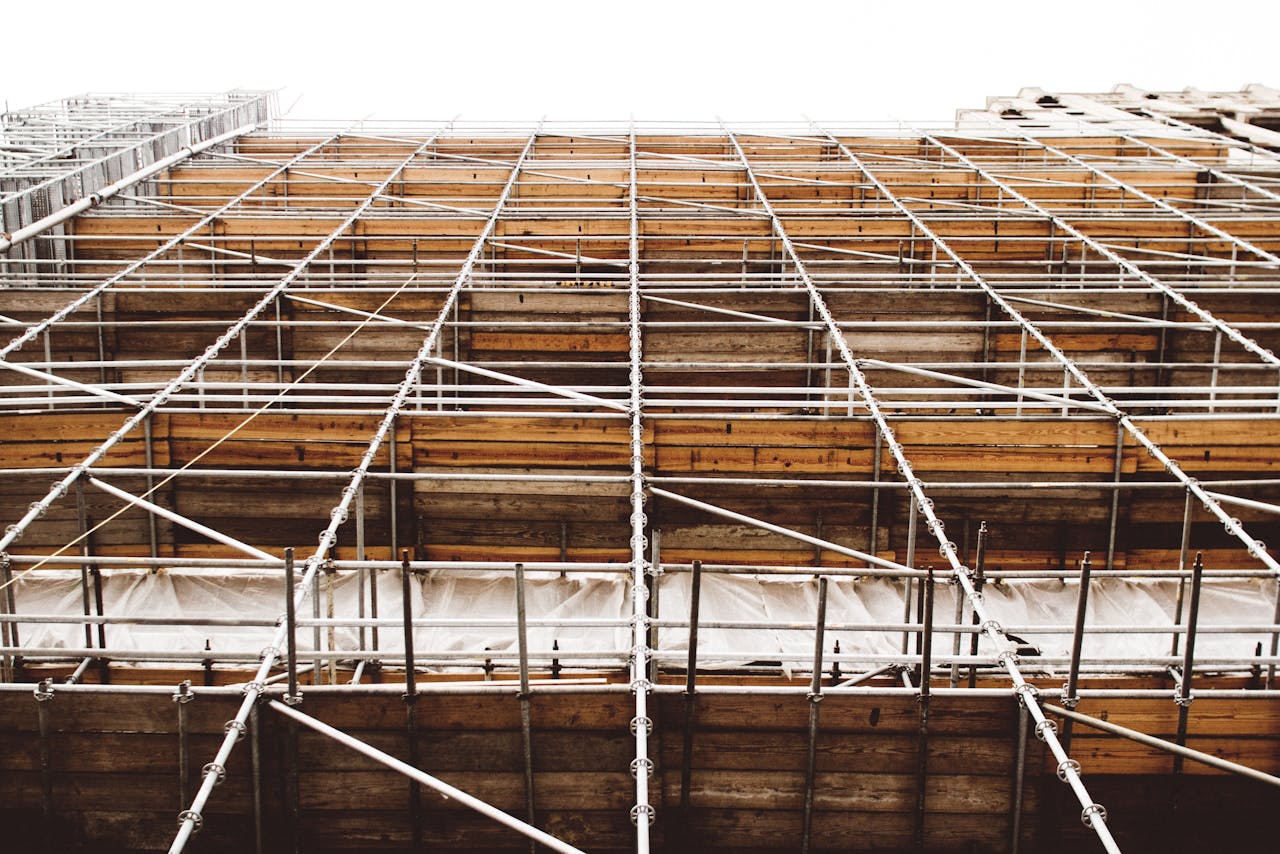
Scaffolding operates within a strict regulatory framework. These aren’t bureaucratic obstacles, they’re the distilled lessons from decades of accidents, near-misses, and safety research. Compliance protects your workers, your business, and your ability to operate.
Navigating regulations might feel like paperwork and hassle, but it’s actually straightforward once you understand the core requirements. And frankly, if regulations seem burdensome, consider the alternative: an unregulated industry where safety depends entirely on individual contractors’ judgment and priorities.
UK Health and Safety Requirements
In the UK, key regulations include the Health and Safety at Work Act 1974, Work at Height Regulations 2005, and CDM 2015. These form the legal foundation for safe scaffolding practice.
The Health and Safety at Work Act establishes general duties, employers must ensure worker safety as far as reasonably practicable. For scaffolding, this means proper design, competent erection, regular inspection, and appropriate use.
Work at Height Regulations 2005 get specific. They require that work at height is properly planned, supervised, and carried out by competent people. You must use the right type of equipment for the work. Fragile surfaces must be identified and protected. Guardrails become mandatory above two metres.
CDM 2015 (Construction Design and Management Regulations) places duties on everyone involved in construction projects, from clients to contractors. For scaffolding, this means ensuring designs are safe, coordinating with other contractors, and maintaining proper documentation throughout the project.
Scaffolds must meet BS EN 12811-1:2003 standards, be inspected regularly, and not be overloaded. The British Standard specifies performance requirements for temporary works equipment. It covers load classes, materials, design principles, and safety requirements. Compliance ensures your scaffold is fit for purpose and safe.
Regular inspection isn’t optional. Scaffolds must be inspected after erection, after any alteration, after any event likely to affect stability, and at least every seven days during use. These inspections must be carried out by competent persons and documented.
Overloading kills people. Every scaffold has a rated load capacity based on its design and configuration. Exceeding this capacity risks collapse. Proper load management means understanding what your scaffold can handle and ensuring that materials, equipment, and workers stay within safe limits.
Workers require proper training, often via CISRS certification. The Construction Industry Scaffolders Record Scheme provides recognised qualifications for scaffold erectors, inspectors, and supervisors. CISRS certification demonstrates competence and is increasingly required by clients and principal contractors.
You can’t just send anyone up to erect scaffolding. It requires specific knowledge of components, assembly sequences, load capacities, and safety requirements. CISRS training provides this foundation and creates a professional standard across the industry.
Cost-Effectiveness and Project Value
Scaffolding represents a significant line item in project budgets. It’s tempting to view it as pure cost, money spent on something that doesn’t directly contribute to the finished building. That perspective misses the bigger picture.
Using scaffolding leads to significant cost savings by improving efficiency and reducing accident risks, thereby lowering overall construction costs. The investment pays for itself through faster completion, higher quality work, and avoided incidents.
Consider efficiency gains first. Workers on scaffolding complete tasks faster than those working from ladders or other less stable platforms. The time saving on a typical domestic project might be 15-20%. On commercial projects with multiple trades working simultaneously, the efficiency multiplier can be even greater.
Faster completion means reduced site overhead costs. You’re paying for supervision, site facilities, insurance, and numerous other time-related expenses. Shave two weeks off a project timeline, and those savings add up quickly.
Quality improvements reduce rework costs. When tradespeople can work comfortably and safely, they produce better results. Fewer callbacks for defects, fewer materials wasted due to poor installation, and fewer disputes over workmanship standards.
Scaffolding rental services offer cost-effective solutions without substantial upfront investment. Unless you’re running a large contracting business with continuous scaffolding needs, purchasing equipment makes little sense. Rental gives you access to the right type and quantity of scaffolding for each project without capital tied up in equipment.
Rental also transfers maintenance responsibilities. The hire company ensures components are in good condition, properly maintained, and compliant with standards. You don’t need storage facilities, maintenance programmes, or replacement schedules.
Reducing Delays and Rework
Safe projects prove more efficient, avoiding costly delays from safety violations or structural failures. A serious scaffold incident doesn’t just harm individuals, it shuts down your entire project.
Health and Safety Executive investigations can halt work for days or weeks. Even minor reportable incidents trigger documentation requirements and potential inspections. Serious incidents mean enforcement notices, prohibition orders, and possible prosecution.
The financial cost of incidents extends beyond direct losses. Your insurance premiums increase. Your reputation suffers, affecting future tender success. Worker morale drops, impacting productivity across your entire operation.
Structural failures create chaos even when nobody gets hurt. A collapsed scaffold means immediate work stoppage, emergency dismantling and rebuilding, potential damage to the building or surrounding property, and investigation to understand what went wrong.
Compare these risks and costs to the investment in proper scaffolding. The calculation isn’t even close. Proper scaffolding is cheap insurance against catastrophically expensive problems.
Rework costs extend beyond obvious repairs. There’s the time to identify defects, organise return visits, coordinate access, and verify corrections. Client relationships suffer. Your schedule gets disrupted. Other projects may be affected as resources get diverted to fix problems.
Scaffolding reduces rework by enabling quality work the first time. Tradespeople working from stable platforms with proper access produce better results. Materials get installed correctly. Finishes meet standards. Inspections pass without remedial work required.
Choosing Professional Scaffolding Services

You can hire scaffolding or engage full-service scaffolding contractors who design, erect, inspect, and dismantle the system. For most projects, the full-service option makes sense unless you have in-house expertise and resources.
Hiring from certified scaffolding companies transfers much legal responsibility to them, reducing your liability exposure. This isn’t about dodging responsibility, it’s about ensuring the right people handle specialised work.
Scaffolding companies carry professional indemnity insurance, public liability cover, and employ trained, certified personnel. When something goes wrong with scaffolding they’ve designed and erected, they bear the consequences. This protects your business from liability arising from scaffold failures or defects.
Professional services ensure compliance with regulations and provide equipment longevity through proper maintenance. They stay current with regulatory changes, understand best practices, and bring experience from hundreds of similar projects.
What should you look for when selecting a scaffolding contractor? Start with CISRS certification for their workforce. This confirms that people erecting your scaffold have proper training and qualifications.
Check for professional memberships like the National Access and Scaffolding Confederation (NASC). NASC members commit to industry standards, regular audits, and continuous professional development. Membership signals a serious, professional operation rather than a casual outfit.
Ask about insurance coverage. Adequate public liability insurance (typically £5-10 million minimum) protects you if scaffold-related incidents cause injury or damage. Professional indemnity insurance covers errors in design or specification.
Request references from similar projects. A company that’s successfully scaffolded dozens of domestic renovations brings relevant experience to your project. Commercial specialists understand the coordination challenges and access requirements of larger sites.
Discuss inspection procedures and documentation. Reputable contractors provide clear inspection schedules, proper handover certificates, and ongoing monitoring throughout the hire period. You should receive written confirmation that your scaffold meets required standards before using it.
Consider service levels beyond initial erection. Can they adapt the scaffold if your requirements change? How quickly do they respond to problems or adjustment requests? Will they provide additional inspections if required by weather events or incidents?
Price matters, obviously, but it shouldn’t be the only factor. The cheapest quote often signals corners being cut somewhere, inadequate equipment, unqualified labour, or insufficient insurance. Mid-range pricing from established, reputable contractors typically offers the best value.
Communication matters too. Your scaffolding contractor needs to coordinate with your schedule, understand your access requirements, and work around your other trades. A contractor who listens, responds promptly, and demonstrates understanding of your project needs will prove far more valuable than one offering marginally lower prices but poor service.
Conclusion
Scaffolding represents essential infrastructure for modern construction, protecting lives whilst enhancing productivity across domestic and commercial projects. The question isn’t whether you need scaffolding, it’s whether you’ll invest in proper, professional systems or cut corners and hope for the best.
The evidence is clear. Proper scaffolding reduces injuries, improves efficiency, enhances quality, and eventually saves money even though the upfront cost. It transforms working at height from a dangerous improvisation into a controlled, productive activity.
Compliance with UK regulatory standards, combined with professional installation and maintenance, ensures both worker safety and project efficiency. These aren’t separate goals, they reinforce each other. Safe sites run more efficiently. Efficient projects allocate resources to proper safety measures.
Your choice of scaffolding and scaffolding contractor sends a message about your priorities. Invest properly and you demonstrate professionalism, care for worker welfare, and commitment to quality. Cut corners and you signal the opposite, with all the consequences that follow.
The construction industry has made remarkable progress in reducing scaffolding accidents over recent decades. That progress came from better regulations, improved training, professional standards, and contractors who prioritised safety over short-term cost savings. You’re part of that continuing story. Make it a good one.
Frequently Asked Questions
How does scaffolding improve safety on construction sites?
Scaffolding provides a secure platform with guardrails, non-slip surfaces, and proper anchorage systems that minimise fall risks. It creates physical barriers preventing workers from stepping over edges and maintains stability even in wet conditions, transforming height work into a controlled, manageable environment.
What are the legal requirements for scaffolding in the UK?
UK scaffolding must comply with the Work at Height Regulations 2005, Health and Safety at Work Act 1974, and CDM 2015. Guardrails are mandatory above two metres, scaffolds require inspection every seven days, and erectors need proper CISRS certification to ensure compliance.
Is scaffolding more cost-effective than using ladders for domestic projects?
Yes, scaffolding typically delivers 15-20% time savings on domestic projects by enabling faster, higher-quality work. It reduces rework costs, prevents costly accidents, and allows multiple workers to operate simultaneously, ultimately offsetting the initial rental investment through improved efficiency.
What is the difference between independent and putlog scaffolding?
Independent scaffolding stands on two rows of vertical posts without relying on the building for support, whilst putlog scaffolding uses one row with support from the building wall. Independent suits commercial projects and weak structures, whilst putlog is more economical for domestic work on solid masonry.
How often should scaffolding be inspected during a construction project?
Scaffolding must be inspected after erection, following any alterations or events affecting stability, and at least every seven days during use. These inspections require a competent person and must be properly documented to meet UK regulatory standards and ensure ongoing safety.
Can scaffolding be used in bad weather conditions?
Scaffolding can withstand various weather conditions when properly erected and maintained, though extreme wind may require work suspension, especially with mobile towers. Non-slip surfaces help maintain safety in wet conditions, but severe weather events trigger mandatory re-inspections before resuming work.