
Construction sites are complex. Materials flow in and out, heavy equipment moves nonstop, and deadlines never go away. Yet, with all the high-tech planning tools and digital project management systems, there’s a persistent weak link in the chain: loading and unloading.
Manual loading is one of the most time-consuming, hazardous, and inefficient parts of the logistics process. Forklifts zigzag across busy yards, workers handle heavy or awkward materials, and valuable cargo is at risk of damage before it even reaches the site.
But automation is changing that. With automated loading systems, construction companies can finally take control of a critical part of their logistics – improving speed, safety, and reliability all at once.
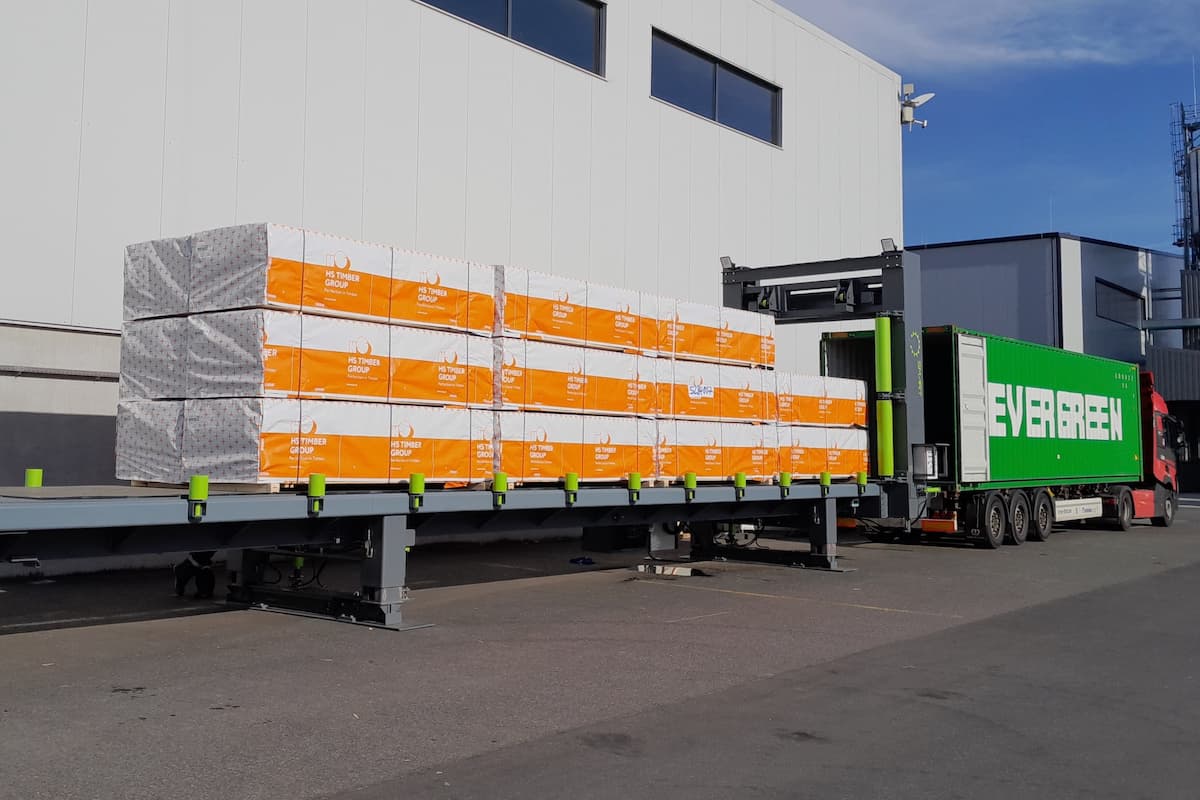
Why logistics keeps holding construction back
Every construction project is a delicate balance between planning and real-world execution. Materials need to arrive in the right order, at the right time, and in perfect condition.
However, most construction logistics operations still rely on manual methods. Loading pallets of bricks, steel beams, or precast concrete is a slow and inconsistent process. Each load can take hours, multiple forklift runs, careful alignment, and a lot of physical labour.
These manual workflows create three major pain points:
- Time delays: Long loading cycles push delivery schedules off track and keep trucks idle.
- Safety hazards: Workers operate in high-traffic areas, around cranes and heavy machinery.
- Material damage: Forklift collisions, unstable loads, or misalignment can ruin expensive prefabricated components.
In an industry where delays are costly and safety is under constant scrutiny, these inefficiencies add up – eroding margins and slowing down projects.
How automation turns logistics from a burden into a strength
Automated loading systems replace the repetitive, unpredictable parts of manual handling with a controlled and consistent process. Instead of loading piece by piece, materials are pre-assembled on a loading platform that slides or pushes the entire cargo into a truck or container in one smooth motion.
The process takes less than 10 minutes, regardless of the construction materials you’re handling. Once positioned, the load is securely transferred in one shot – no forklifts, no constant supervision, and no risk to workers standing nearby.
The precision of these systems ensures every cubic metre of truck space is used efficiently. Loads stay stable from start to finish, reducing damage risk and rework. And since forklifts no longer need to enter the trailer, loading areas are cleaner, safer, and more organized.
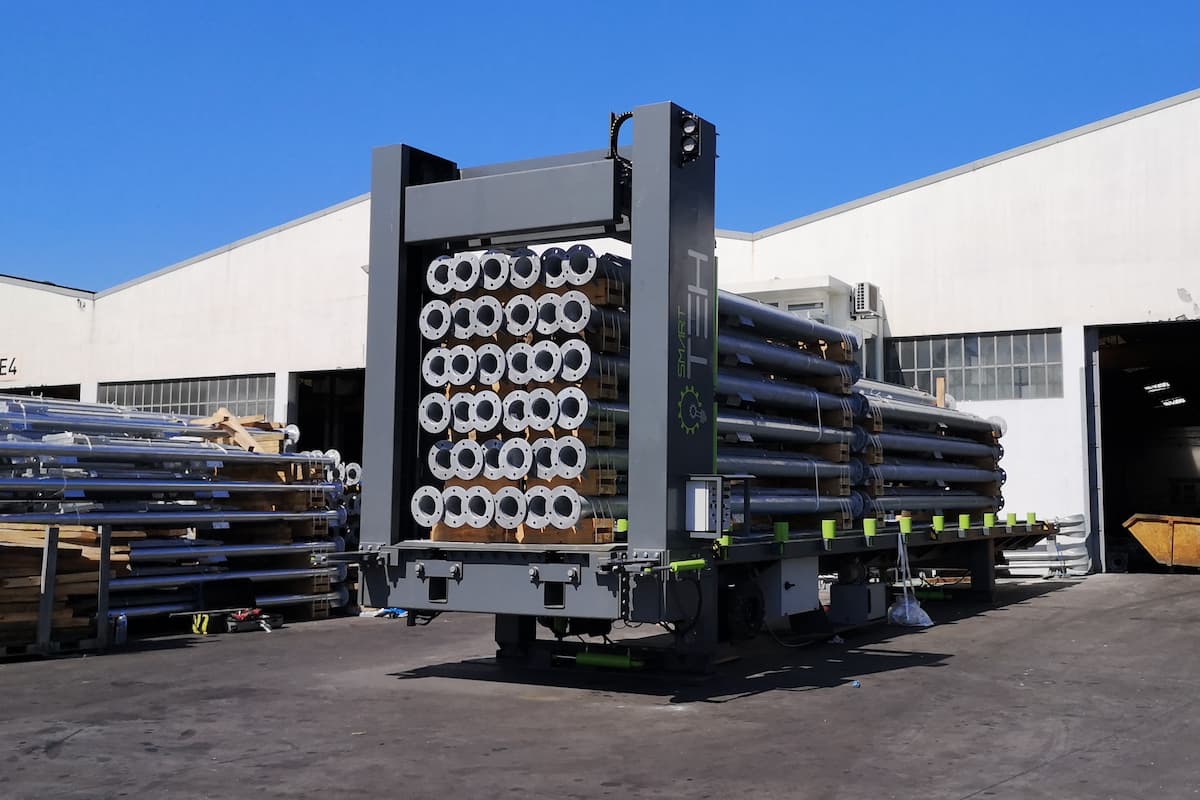
Real-world benefits of automating construction logistics
Automation in construction logistics delivers measurable improvements across multiple dimensions – not just speed, but overall operational quality.
1. Loading that keeps up with your schedule
What once took an hour can now be done in minutes. Automated systems move materials up to three times faster than traditional methods, ensuring that trucks are on the road and construction sites are supplied without delay. This consistent pace helps contractors avoid costly schedule overruns and keeps workflows predictable.
2. A safer work environment
Forklift-related incidents are among the most common causes of injuries in industrial logistics. By reducing or even eliminating forklift use in the loading zone, automated systems lower those risks. Operators can monitor the process from a safe distance, away from moving loads and blind spots. The result is a cleaner yard, fewer hazards, and a happier, safer workforce.
3. Less waste, better material care
From prefabricated walls to fragile glass panels, construction materials need to be handled with care. Automated loading ensures stable, balanced transport every time, preventing scratches, cracks, and deformation. Protecting materials from damage saves time and money otherwise spent on reorders and replacements.
4. Cost savings through efficiency
Speed and precision pay off quickly. With reduced loading times, companies can move more trucks per shift, reduce labour hours, and lower fuel and equipment expenses. In many cases, the ROI is visible within one to two years – simply by improving throughput and reducing idle time.
5. Supporting sustainability goals
Automation also contributes to greener logistics. Less forklift usage means fewer emissions and less energy consumption. Optimized loading reduces the number of trips needed to transport materials, saving fuel and lowering the company’s carbon footprint. For construction businesses looking to meet ESG targets, automated systems are a straightforward way to make logistics more sustainable.
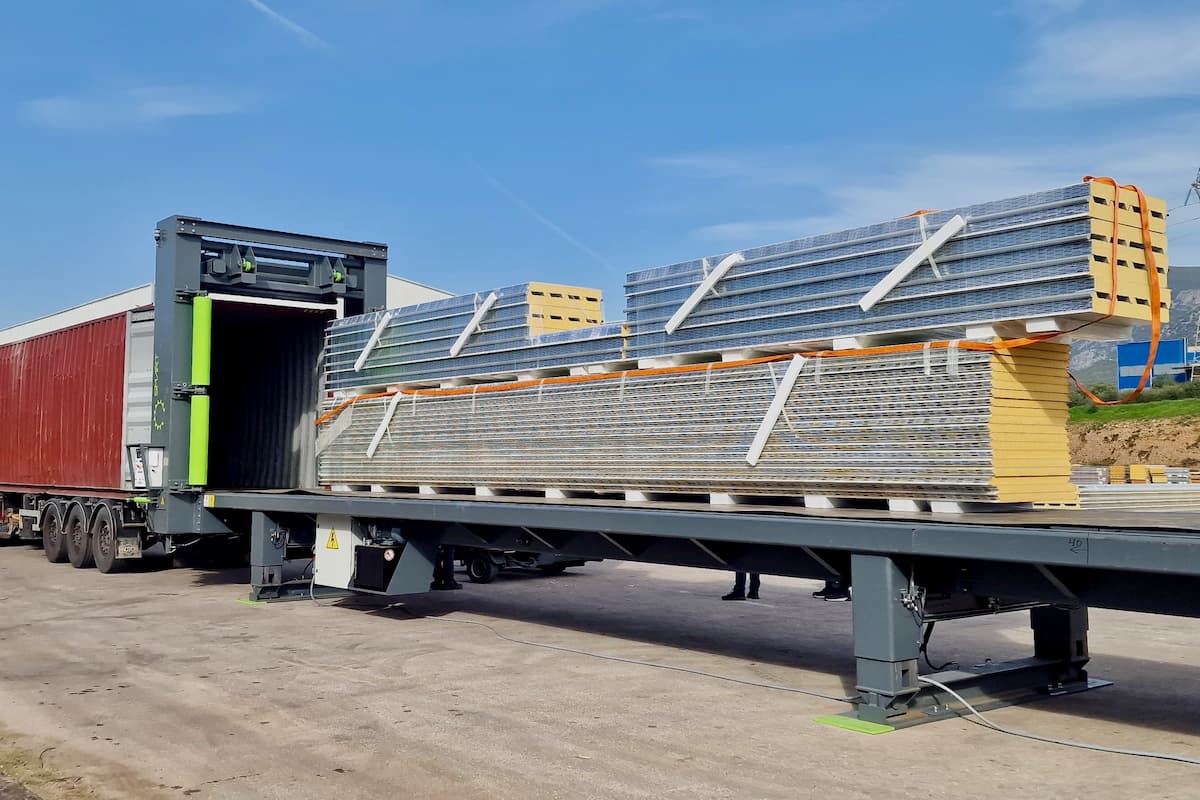
Built for construction’s toughest demands
One of the key strengths of modern automated loading systems is versatility. Construction logistics involves a vast range of materials – different shapes, weights, and fragility levels – and automation adapts to them all.
The same system can handle:
- Precast concrete sections and steel profiles
- Plywood, drywall, and insulation panels
- Laminated timber, CLT, and glulam elements
- Sandwich panels and façade components
- Palletized materials and heavy equipment parts
- Pipes, cables, and modular building components, etc.
Whether loading a 20-, 40-, or 45-foot container, or a standard truck trailer, these systems are built for heavy-duty performance. For example, SmartTEH’s container and truck loading system can handle up to 30 tonnes per load, and it works in both directions – loading and unloading.
Installation is equally flexible. Automated loaders can be integrated into production or storage facilities without major reconstruction, so companies can upgrade existing workflows instead of rebuilding them.
The road ahead: automation as the new standard
In an industry where every hour counts, logistics automation has become a competitive necessity. Automated loading lets companies move more deliveries per day, maintain consistent material quality, and improve safety – all without increasing team size. These efficiencies strengthen partnerships, lower insurance costs, and enhance reputation.
As construction advances through digitalisation, prefabrication, and smart design tools, logistics often falls behind. Automated loading systems bridge that gap – making material handling as smart and efficient as the rest of the building process.
By automating this critical stage, companies protect teams, safeguard materials, and keep projects on schedule, building more efficiently, safely, and reliably than ever before.